Harder to tackle, and still standing in round 18.
Strength work for club rugby that fits around training nights, fixtures and contact load, rather than competing with them. I have played since I was six, I coach two sides at Wellington, and I hold the Rugby Australia performance-pathway accreditation you can check.
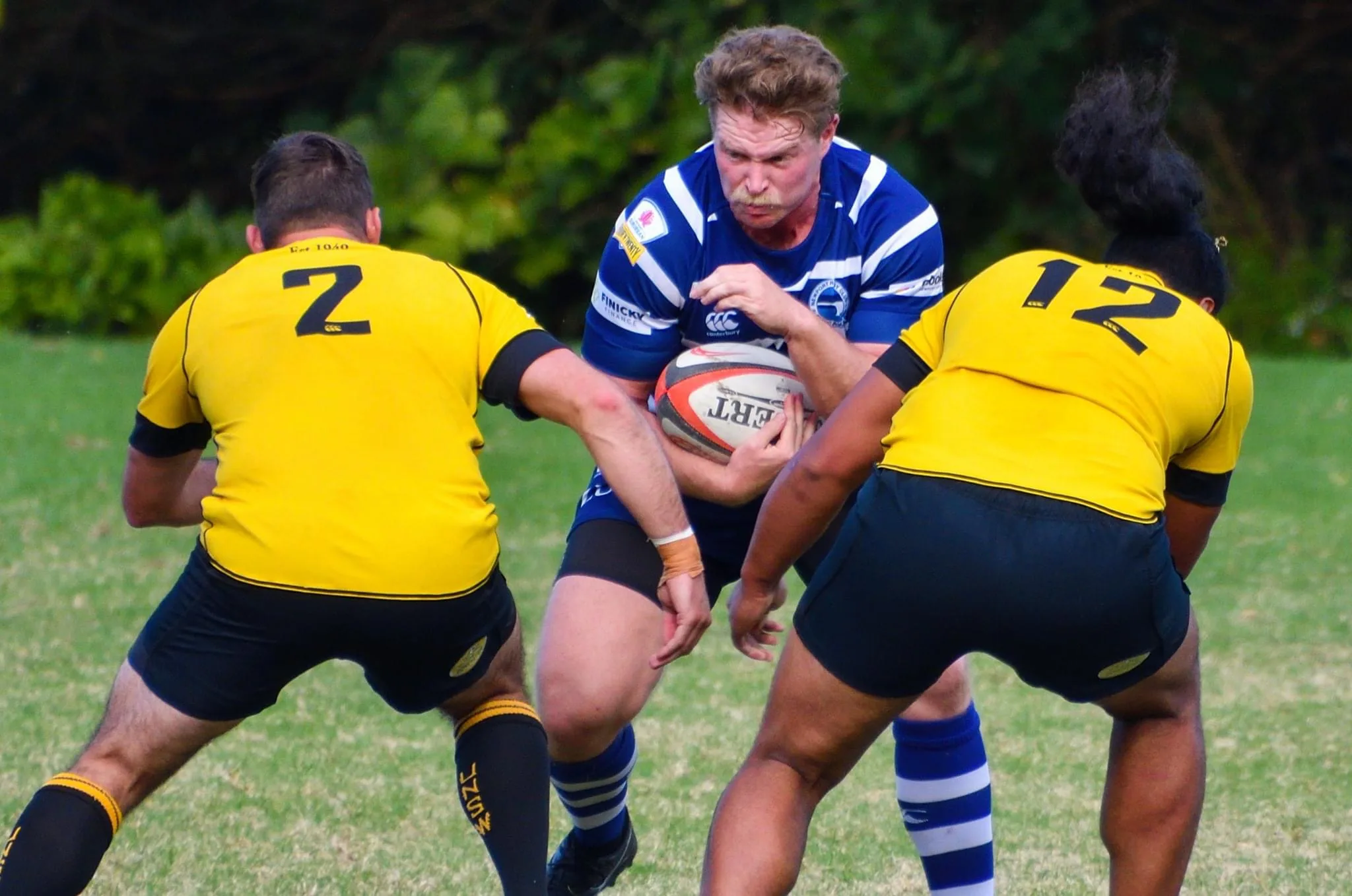
Who is this for?
Two people usually arrive on this page, and they want different things. A player who wants to be harder to move, and a parent deciding whether to trust a stranger with their teenager. Both are answered here.
Senior club players
You want to win more contact and last the season. The work has to fit around two training nights, a fixture, and a job.
Colts and juniors
Still growing, and that changes what loading is appropriate. Technique and consistency come before adding weight to the bar.
Players in a pre-season
A block with a date on it. The strength you build before round 1 is the strength you defend for the rest of the year.
Players coming back from injury
Once you are cleared to load by whoever is treating you. I work alongside that clearance, not around it.
Should a teenager be lifting weights at all?
Yes, when it is supervised, technique-led and loaded appropriately for where they are in their growth. The risk in junior rugby is contact and volume, not a well-programmed set of five. Here is exactly how I handle it, and exactly what you can check about me.
Technique before load
A junior earns weight on the bar by showing the movement, on video, at a load they control. If the technique is not there, the load does not go up. That is not a philosophy, it is the progression rule.
Supervision is a condition
Under 18s train with an adult present, in a gym, not alone in a garage. I will ask you to confirm that before the first block, and I would rather lose the client than skip it.
Growth changes the plan
A player mid growth spurt gets less loading and more movement quality, because coordination and tendon tolerance lag behind the height. That shows up in the programming, not just in the conversation.
Contact load is the real risk
Their week already has two training nights and a match in it. My job is often to take work out, not add it, so the gym does not become the fourth collision session.
What you can check about me
- Rugby Australia Pathways & Performance Coach
- to 2029
- Community Coach
- to 2028
- Season Ready
- current
Pathways & Performance is the performance-pathway accreditation, not the entry-level one. I currently coach Wellington RUFC Men’s XV and Wellington JRUFC Juniors XV for the 2026 season.
Everything else you can verifyWhat I am not
- Not a physiotherapist, doctor or dietitian. I do not diagnose, treat or clear injuries.
- Not a selector. I have no influence on your child’s selection at their club, including the sides I coach.
- Not a replacement for their club coach. I work with the season their club has set, not against it.
- Not a supplement seller. Nothing on this site earns me commission.
Coaching only. No medical or therapeutic claims are made. IronCoaching is a private business and is not affiliated with, or endorsed by, Rugby Australia or any club named here.
What does the training look like?
Two or three gym sessions a week in season, built around your fixture rather than dropped on top of it. The aim is to be harder to move in contact and still be available in round 18, which are the same problem viewed from two ends.
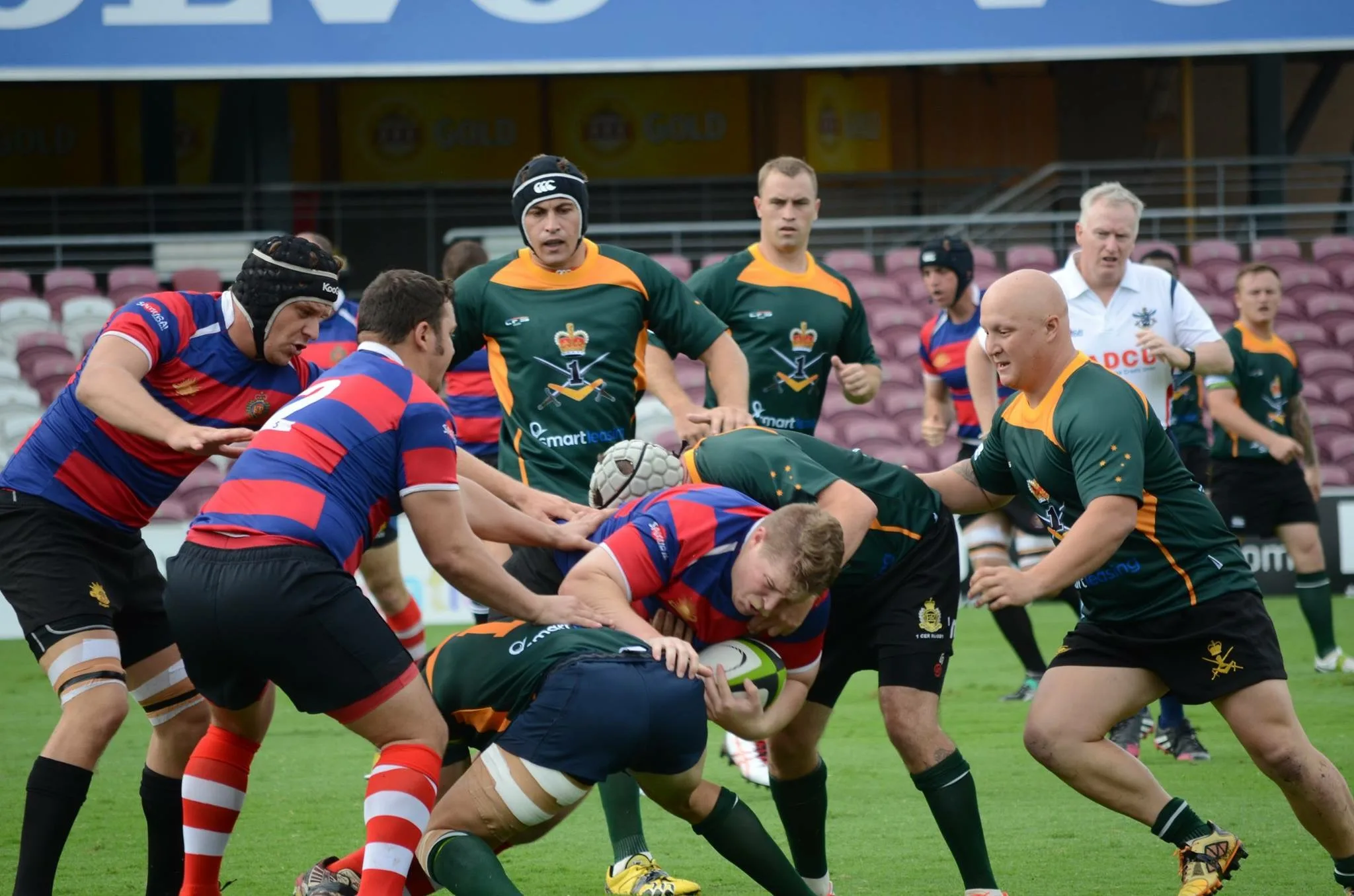
Lower body strength
Squat and hinge patterns, loaded heavy enough to matter. This is what wins the collision and what holds a scrum up.
Neck, trunk and shoulders
Trained deliberately, not as an afterthought. The positions rugby puts you in are the positions you need to be strong in.
Speed and acceleration
Short efforts at real intent, kept well away from your heaviest sessions so neither one ruins the other.
Availability
The most underrated quality in club rugby. A good season is one where you are fit to be picked every week, and that is a programming outcome.
Your window shrinks the week you start playing
In pre-season, rugby takes almost nothing out of you, so the band of load you can absorb in the gym is wide. Once fixtures start, contact and match minutes take most of it. Same athlete, much narrower window, and that is why in-season programming that ignores your fixture list gets people hurt.
Gym load available across a season
Pre-season is where the strength gets built, because there is room for it. In season the gym work gets smaller and more precise, and it is protecting what you built rather than chasing more. Finals is the narrowest window of the year and the worst time to discover that.
Build the base
Three gym sessions, heavy lower body work, and running volume that climbs before contact starts. This is the only part of the year with genuine room to add strength.
Defend it
Two short sessions, placed by where your match sits in the week. Enough load to hold strength, not enough to arrive at Saturday already beaten up.
Spend it
Minimum effective dose. By this point the training is about being available and fresh, and the honest answer is usually to do less.
How much does online coaching cost?
Three coaching tiers, all billed weekly. Monthly check-ins at $49, weekly check-ins at $69, and weekly check-ins with managed nutrition at $89. In-season players are usually best on weekly check-ins, because the plan has to move with the fixture list. The PFA Readiness Check is free. Every tier is by application, because I only take clients I can actually move.
PFA Readiness Check
FreeEnter your push-ups, sit-ups and shuttle-run score, pick your Service and entry category, and get a scored gap against the published PFA minimums, per component, with what to do about each one. No account, and no email needed to see your result.
Monthly Check-in
Individualised programming with a monthly review. For lifters who are consistent on their own and need the plan to be right.
- Individualised programming
- Monthly video review and check-in
- Programming adjusted each month
- Direct message access
- Bodyweight and weight-class targets
Weekly Check-in
The same programming with weekly contact. For anyone with a meet, a PFA date or a season to be ready for.
- Everything in Monthly Check-in
- Weekly video review and check-in
- Programming adjusted weekly
- Optional fortnightly call
Weekly + Nutrition
Everything, including the nutrition work that made the bodyweight-down, total-up trajectory possible.
- Everything in Weekly Check-in
- Full nutrition coaching
- Weekly nutrition check-in
- Playing-weight and body-composition planning
Founding cohort
9 of 10 places openApplications are open now. The first 10 clients take 20% off whichever tier they pick, locked for as long as they stay, in exchange for documented results and a testimonial. That is the trade: the practice is new, and I need proof that is not my own.
Client results
No client results published yet, and I have invented none. Applications are open now. The founding cohort is the first 10 clients, and I will publish their numbers and dates here as they come in.
Testimonials
None yet, and none invented. The founding cohort exchanges a locked rate for a testimonial once there is something real to say. Until then, my own record is the proof, and it is published by someone else.
Common questions
Answer first, detail second. If something here is not answered plainly enough, the application form has a free-text field, and I read it.
Find your window. Then move it.
10 founding places at 20% off, locked for as long as you stay. I read every application myself.
Last reviewed . Figures on this page are rechecked against their sources rather than left to go stale.