Clear the PFA, then be ready for what comes after it.
The Pre-entry Fitness Assessment is a floor, not a finish line. I build the base that gets you through it and through initial training: push-ups, sit-ups and the beep test first, then the strength, conditioning and honest expectation-setting that keep you in the system once you are in.
I served 14 years as an Artillery officer in the Australian Army. I am not a recruiter, and I say so plainly further down this page.
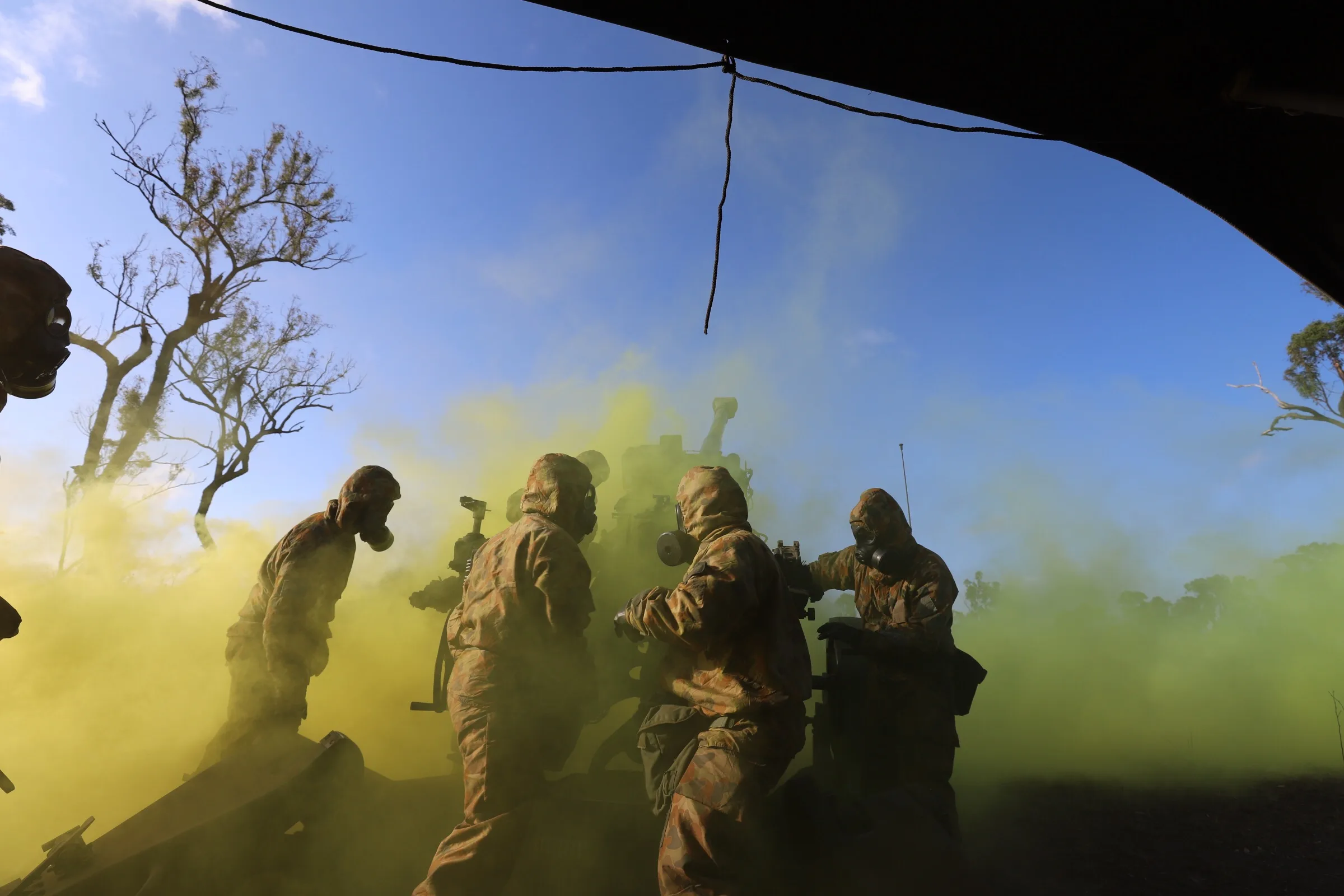
Who is this for?
Three people. Someone with an application open who has a PFA date coming. Someone who has already sat it and did not clear one component. And someone enlisted or about to be, who wants a base that survives initial training rather than a number that peaks on test day and collapses afterwards.
You have a PFA date
You know roughly where you are and you need the gap closed by a fixed date. This is the most common start, and the assessment is the first thing we do.
You missed a component
Usually one of the three, not all of them. We train the one that failed without letting the other two slide, which is where most self-directed prep goes wrong.
You are preparing for what follows
Marching, load carriage, broken sleep and back-to-back days. Clearing the test is the easy part. Arriving durable is the point.
What are the ADF fitness standards?
Push-ups, sit-ups with feet held, and the 20m shuttle run. The figures below are the published minimums from the ADF’s own “Training for the Pre-entry Fitness Assessment” guide. They vary by Service and entry category, not by age. You also need a BMI between 18.5 and 32.9, measured on Assessment Day and again on entry.
What can a coach actually do for your application?
Make you physically ready, and nothing else. I am not a recruiter. I cannot submit, accelerate, influence or advocate for your application, I have no visibility of your file, and nobody who tells you otherwise is being straight with you. What I control is the physical base you bring to the assessment.
- Assess where you are against the components you will be tested on.
- Program the push-up, sit-up and aerobic work to close the gap by your date.
- Build the strength and load tolerance that initial training demands afterwards.
- Manage bodyweight and food around the training, not against it.
- Brief you on what basic training is actually like, so the routine is not a surprise.
- Influence, submit or track your application in any way.
- Speak for Defence, or promise an outcome at any stage of recruiting.
- Give medical or psychological clearance. That is not coaching.
- Set or reinterpret the standards. I publish the ADF’s figures and cite them.
IronCoaching is a private business. It is not affiliated with, or endorsed by, the Australian Defence Force.
What does the training look like?
Three or four sessions a week, built around the three assessed components and the load carriage that follows them. Push-ups and sit-ups are trained as strength work with volume that accumulates, not as daily max-effort sets. The aerobic work is paced, because the beep test rewards pacing more than it rewards guts.
Push-ups and sit-ups
Trained as strength and endurance, with accumulated volume and strict depth. Form is what gets counted on the day.
The beep test
Interval work at the turn speeds you will actually meet, plus practice at the turn itself. Most levels are lost on the turn, not on the straight.
Strength base
Squat, hinge, press and carry. This is the part that decides whether you hold up through initial training, and it is the part most PFA prep skips.
Load and durability
Progressive carries and time on feet, introduced early enough that your ankles, knees and shoulders adapt before the volume arrives.
What should you expect at basic training?
A fixed routine, very little control over your own day, and constant low-level assessment. Most people who struggle early are not unfit, they are surprised. I ran that environment for 14 years as an officer, so I can tell you what it actually looks like before you walk into it.
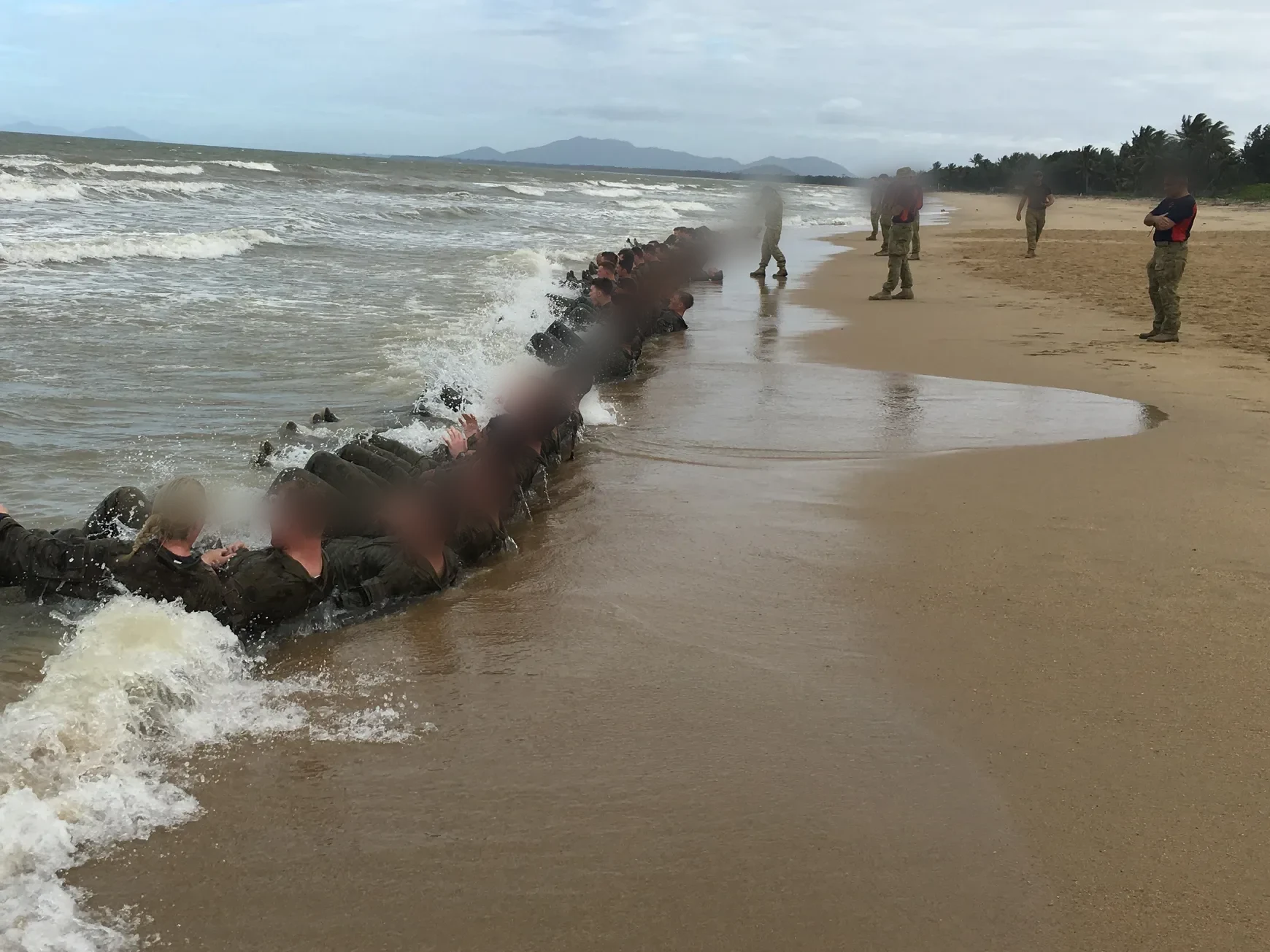
The routine owns your day
When you eat, sleep, wash and move is decided for you. The adjustment is real, and knowing it is coming takes most of the sting out of it.
You will be corrected constantly
Not because you are failing. Correction is the teaching method. Recruits who read it as personal have a much harder first fortnight than recruits who expect it.
You perform tired
Short sleep, early starts and back-to-back days. We train some sessions deliberately under fatigue so that performing while tired is familiar rather than alarming.
It is a team result
You are assessed with your section as much as against it. The people who do well are useful to the people around them, and that is a habit you can build now.
What mental preparation means here, and what it does not
It means briefing you honestly on the environment, rehearsing the routine, building the habit of performing while tired, and setting expectations that survive first contact with an instructor. It is preparation from someone who ran that training.
It is not counselling, therapy, psychological assessment or medical advice, and I do not offer those. If you need that kind of support, it should come from a qualified professional, and Defence provides it once you are in.
How does the method apply to ADF preparation?
By separating the test from the training. Peaking for one assessment is easy and useless. Finding your window means measuring how much work you tolerate each week, then raising the floor so that clearing the standard becomes ordinary rather than a personal best you have to reproduce on a nominated day.
Measure the gap
Current push-ups, sit-ups and beep-test level against the components you will be assessed on. The Readiness Check does this part free.
Find the tolerable load
Weekly check-ins log sessions, reps, pacing, sleep and soreness. That data is what locates the edge of your window instead of guessing at it.
Raise the floor
Each block moves the band up, so the standard stops being a ceiling you reach for and becomes a level you sit above comfortably.
The call is mine
When your date is close and the data says push, I push. When it says back off with three weeks to go, I back off, because turning up to an assessment cooked is how people fail components they could clear. The analysis structures your data. I decide what to do about it.
Read the method in fullWhy train for the ADF with me?
Because I have been through the system and I led soldiers through it. I served 14 years as an officer in the Australian Army’s Artillery, so I know what initial training asks of a body and what arriving underprepared costs. I also still compete, and I publish every number.
Australian Army officer, Artillery
14 years of service, from the officer’s side. I have run the physical training of soldiers, not just completed it.
Stated as service history. No ADF affiliation or endorsement is implied.Competing powerlifter
Best total 687.5kg at 418.07 Dots. I dropped 11.2kg of bodyweight while adding 57.5kg to my total, which is the same problem most applicants have.
Verify on OpenPowerliftingFounder of IronLedger
I built the tracker you log into, so your sessions, reps and pacing arrive in one structure instead of scattered across notes and screenshots.
ironledger.appStart with the gap, not with a payment.
The Readiness Check is free and takes two minutes. Enter where you are now, pick your entry category, and it scores the gap against the published minimums per component. It is the method in miniature: your data in, an analysis back. Nothing is charged beyond an email address.
How much does online coaching cost?
Three coaching tiers, all billed weekly. Monthly check-ins at $49, weekly check-ins at $69, and weekly check-ins with managed nutrition at $89. The PFA Readiness Check is free. Every tier is by application, because I only take clients I can actually move.
PFA Readiness Check
FreeEnter your push-ups, sit-ups and shuttle-run score, pick your Service and entry category, and get a scored gap against the published PFA minimums, per component, with what to do about each one. No account, and no email needed to see your result.
Monthly Check-in
Individualised programming with a monthly review. For lifters who are consistent on their own and need the plan to be right.
- Individualised programming
- Monthly video review and check-in
- Programming adjusted each month
- Direct message access
- Bodyweight and weight-class targets
Weekly Check-in
The same programming with weekly contact. For anyone with a meet, a PFA date or a season to be ready for.
- Everything in Monthly Check-in
- Weekly video review and check-in
- Programming adjusted weekly
- Optional fortnightly call
Weekly + Nutrition
Everything, including the nutrition work that made the bodyweight-down, total-up trajectory possible.
- Everything in Weekly Check-in
- Full nutrition coaching
- Weekly nutrition check-in
- Weigh-in and cut planning for meets
Founding cohort
9 of 10 places openApplications are open now. The first 10 clients take 20% off whichever tier they pick, locked for as long as they stay, in exchange for documented results and a testimonial. That is the trade: the practice is new, and I need proof that is not my own.
Client results
No client results published yet, and I have invented none. Applications are open now. The founding cohort is the first 10 clients, and I will publish their numbers and dates here as they come in.
Testimonials
None yet, and none invented. The founding cohort exchanges a locked rate for a testimonial once there is something real to say. Until then, my own record is the proof.
Common questions
Answer first, detail second. If something here is not answered plainly enough, the application form has a free-text field, and I read it.
Find your window. Then move it.
10 founding places at 20% off, locked for as long as you stay. I read every application myself.
Last reviewed . Figures on this page are rechecked against their sources rather than left to go stale.