Meet prep from someone still on the platform.
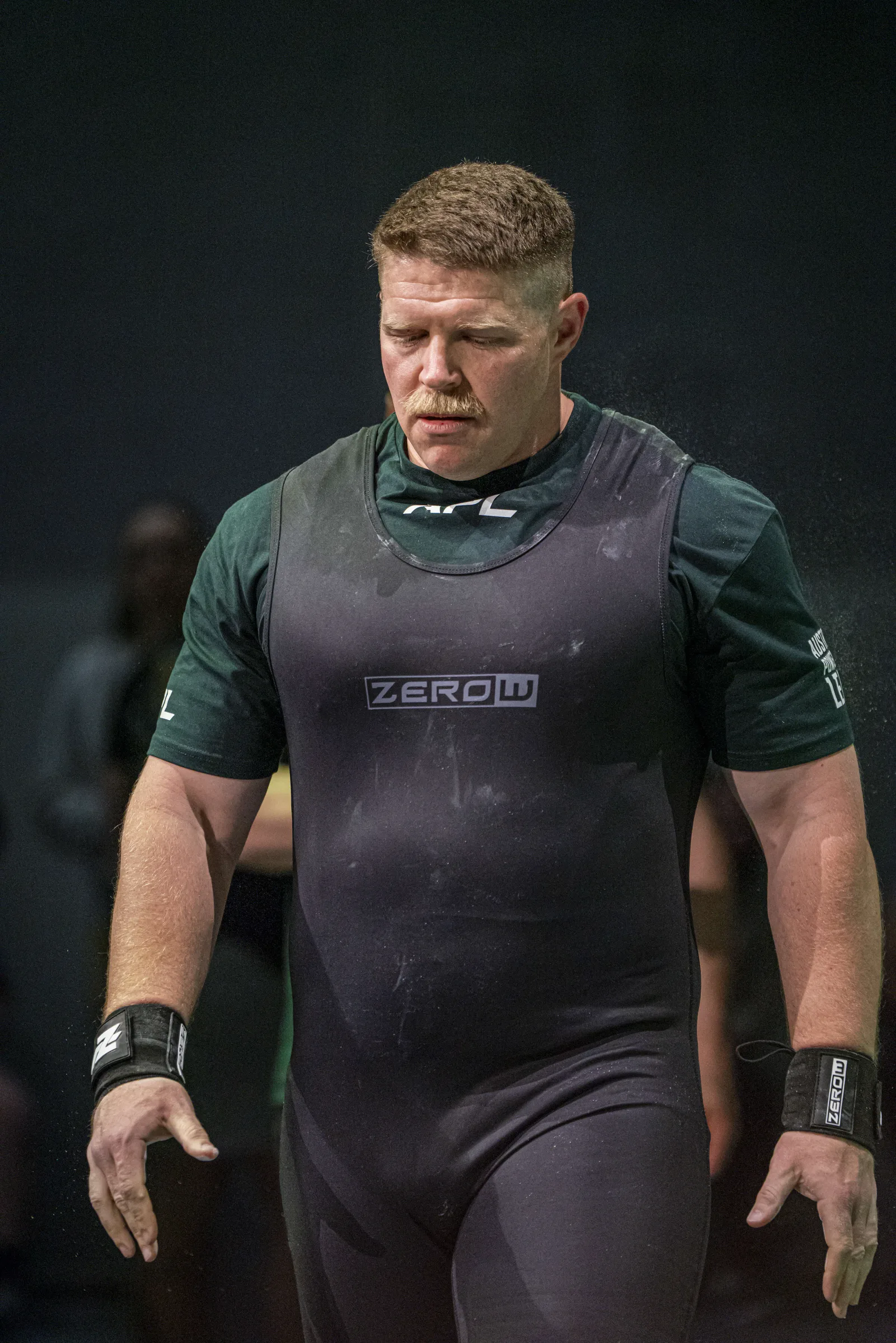
I coach powerlifters through meet prep: block structure, attempt selection, peaking, and the recomposition that gets you stronger in a lighter class. I compete in the same Australian federations you do, and every number I have posted is public.
Best total 687.5kg at 418.07 Dots. Squat 232.5 · bench 175 · deadlift 280.
Who is this for?
Three lifters. Someone entering a first meet who does not know how the day runs. Someone already competing who keeps missing attempts they should be making. And someone whose total has not moved in a year despite training hard, which is usually a programming or bodyweight problem rather than an effort problem.
Your first meet
Federation rules, weigh-in, warm-up timing, commands and attempt selection. Most first meets are lost to the process, not to the weights.
Already competing
You have a total and you want a bigger one. We audit where the attempts are going and rebuild the block around your actual meet date.
Stalled for a year
Hard training, flat total. This is where structured data earns its place, because the pattern is usually visible the moment it is written down.
What does my record actually show?
Across 28 months my total went from 610kg to 687.5kg while my bodyweight went from 108.2kg to 97kg. I moved down from the 110kg class to the 100kg class and won it. Dots went from 363.56 to 416.34, which is the number that matters once bodyweight is moving. Every figure is published by OpenPowerlifting.
Total up, bodyweight down: 5 meets, 28 months
The total and the bodyweight lines cross in late 2024. That crossover is the outcome most clients are asking for: stronger and lighter at the same time, and nutrition is what did it, underneath the programming. It is the outcome I now coach for. Watch the Dots line at the last meet. The total came down 20kg, but Dots held, because I was 5.9kg lighter. Raw total is not the measure. Strength relative to bodyweight is.
What does the training look like?
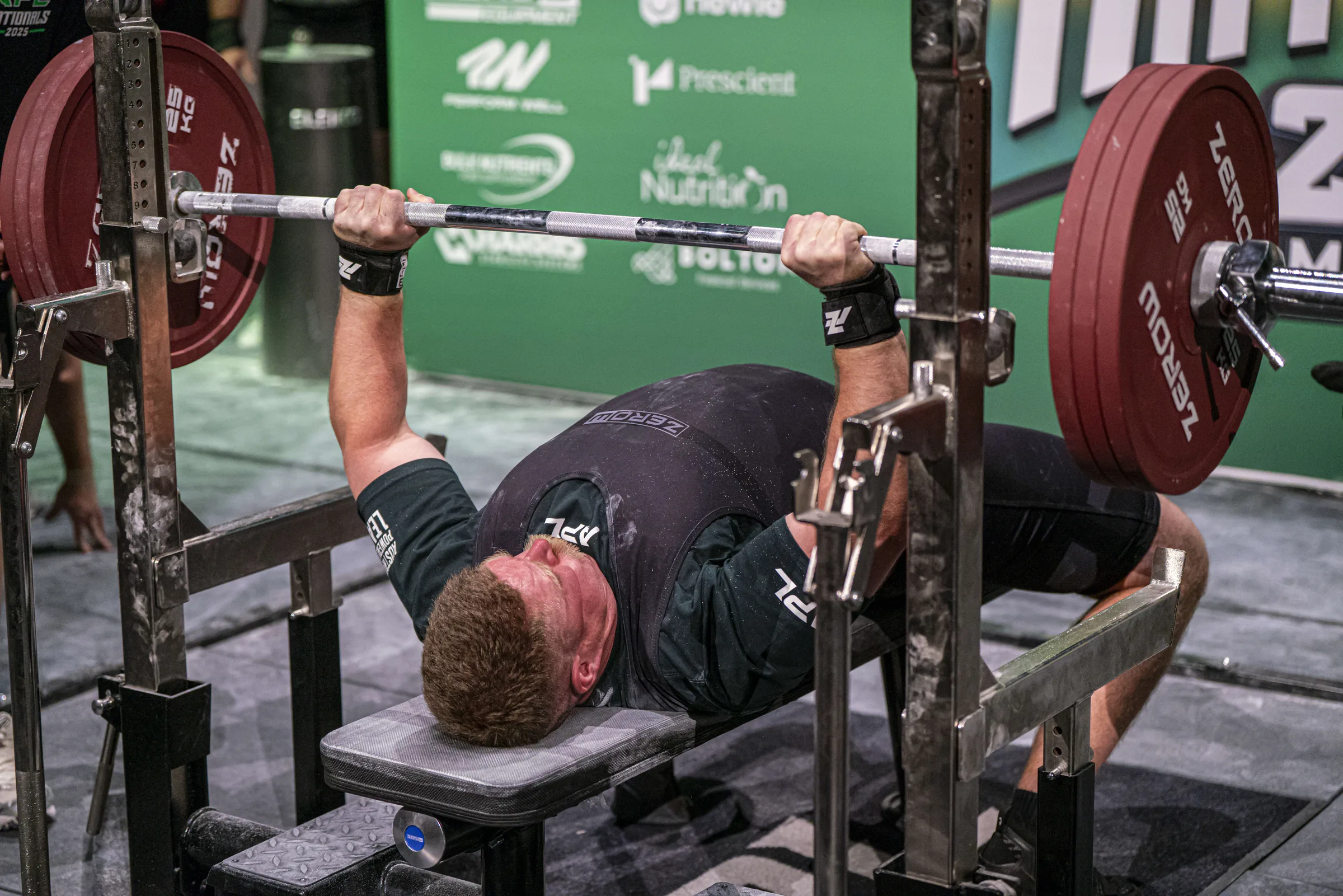
Blocks of 8 to 12 weeks built backwards from your meet date. Squat, bench and deadlift programmed to a plan, with accessory work that serves the three lifts rather than filling time. Video review every week, and attempt selection rehearsed long before you are standing behind the bar.
Block structure
Accumulation, intensification, taper. Each block has a job, and you know what it is before it starts.
Meet prep
Openers, second and third attempts chosen from your logged data, not from how you feel in the warm-up room.
Technique review
Video on the main lifts every week. Depth, bar path, bracing and command timing, because a red light is a lost attempt.
Handling on the day
Timing your warm-ups against the flights, and what to do when the meet runs early or late.
How does the method apply to peaking?
Fatigue masks fitness, so the closer you get to a meet the more the window matters. Too much work in the last block and you turn up strong but buried. Too little and you arrive fresh and detrained. Finding the edge is a measurement problem, and your logged data is the measurement.
Measure the load
Sets, loads and RPE logged every session in IronLedger, so the week is comparable to the last one.
Watch the trend
e1RM trend lines rather than single-session heroics. One good day is noise. Four weeks of climb is a signal.
Read the recovery
Sleep, bodyweight and soreness alongside the loads. Fatigue shows up here before it shows up in the bar speed.
The call is mine
When to taper, what your openers are, and whether that third attempt is on. I have made those calls on my own platform five times, and I make them on yours from your data. The analysis surfaces the pattern. The judgement is mine.
Read the method in fullCan I get stronger in a lighter class?
Yes, and I have the receipts. I dropped 11.2kg of bodyweight while adding 57.5kg to my total, moved from the 110kg class into the 100kg class, and won it. That is the hardest thing to do in this sport and it is almost entirely a nutrition problem sitting underneath the programming.
How it is done
- Runway
- Months, not weeks. A class change is planned a block out.
- Rate
- Slow enough that the bar does not get lighter with you.
- Measure
- Dots, not raw total. It is the honest score when weight moves.
- Weigh-in
- Planned against the federation's rules, not improvised in a sauna.
What the numbers did
Managed nutrition is the top coaching tier, at $89 per week. Every tier plans your bodyweight and class, because you cannot program a cut without it. It starts with the same structured intake every client completes.
Apply for coachingWhy train with me and not a bigger name?
Because you can check everything I claim, today, on a database I do not control. I compete now, in Australian federations, at national level. A large roster is not evidence and neither is a logo. Dated, third-party-verifiable numbers are the only proof that means anything.
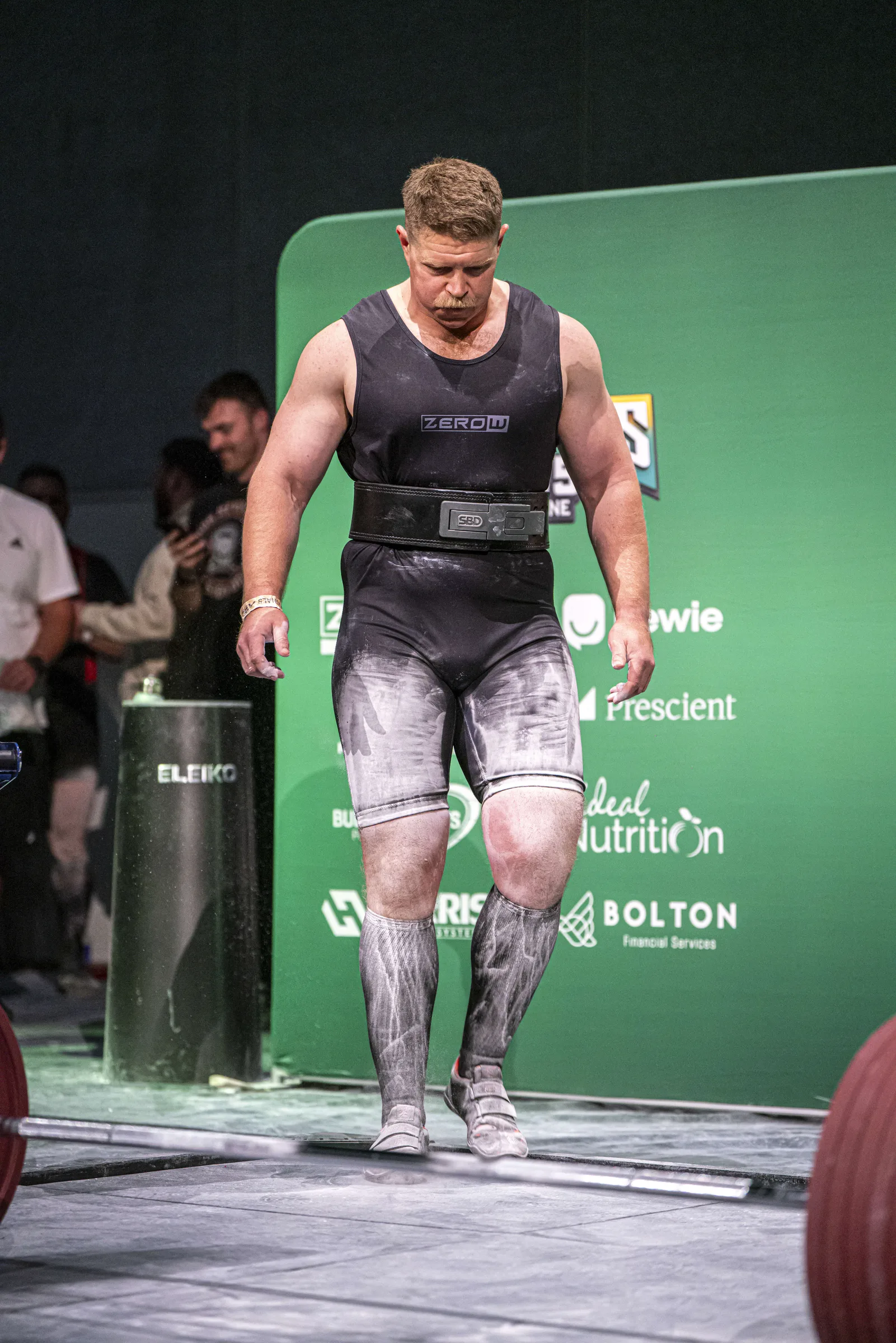
I still compete
Five sanctioned meets since 2023, including a drug-tested qualifier and a national championship. I am in the same warm-up rooms you are.
Every number is public
OpenPowerlifting publishes my record, including the meets that went badly. 20th at Nationals is on there next to the win.
I was coached for it
Henny’s Strength & Performance coached me through that run, which is exactly why I know what good coaching is worth paying for.
I built the tracker
IronLedger is mine, so your sets and loads arrive in one structure instead of scattered across notes and screenshots.
How much does online coaching cost?
Three coaching tiers, all billed weekly. Monthly check-ins at $49, weekly check-ins at $69, and weekly check-ins with managed nutrition at $89. The PFA Readiness Check is free. Every tier is by application, because I only take clients I can actually move.
PFA Readiness Check
FreeEnter your push-ups, sit-ups and shuttle-run score, pick your Service and entry category, and get a scored gap against the published PFA minimums, per component, with what to do about each one. No account, and no email needed to see your result.
Monthly Check-in
Individualised programming with a monthly review. For lifters who are consistent on their own and need the plan to be right.
- Individualised programming
- Monthly video review and check-in
- Programming adjusted each month
- Direct message access
- Bodyweight and weight-class targets
Weekly Check-in
The same programming with weekly contact. For anyone with a meet, a PFA date or a season to be ready for.
- Everything in Monthly Check-in
- Weekly video review and check-in
- Programming adjusted weekly
- Optional fortnightly call
Weekly + Nutrition
Everything, including the nutrition work that made the bodyweight-down, total-up trajectory possible.
- Everything in Weekly Check-in
- Full nutrition coaching
- Weekly nutrition check-in
- Weigh-in and cut planning for meets
Founding cohort
9 of 10 places openApplications are open now. The first 10 clients take 20% off whichever tier they pick, locked for as long as they stay, in exchange for documented results and a testimonial. That is the trade: the practice is new, and I need proof that is not my own.
Client results
No client results published yet, and I have invented none. Applications are open now. The founding cohort is the first 10 clients, and I will publish their numbers and dates here as they come in.
Testimonials
None yet, and none invented. The founding cohort exchanges a locked rate for a testimonial once there is something real to say. Until then, my own record is the proof, and it is published by someone else.
Common questions
Answer first, detail second. If something here is not answered plainly enough, the application form has a free-text field, and I read it.
Find your window. Then move it.
10 founding places at 20% off, locked for as long as you stay. I read every application myself.
Last reviewed . Figures on this page are rechecked against their sources rather than left to go stale.